
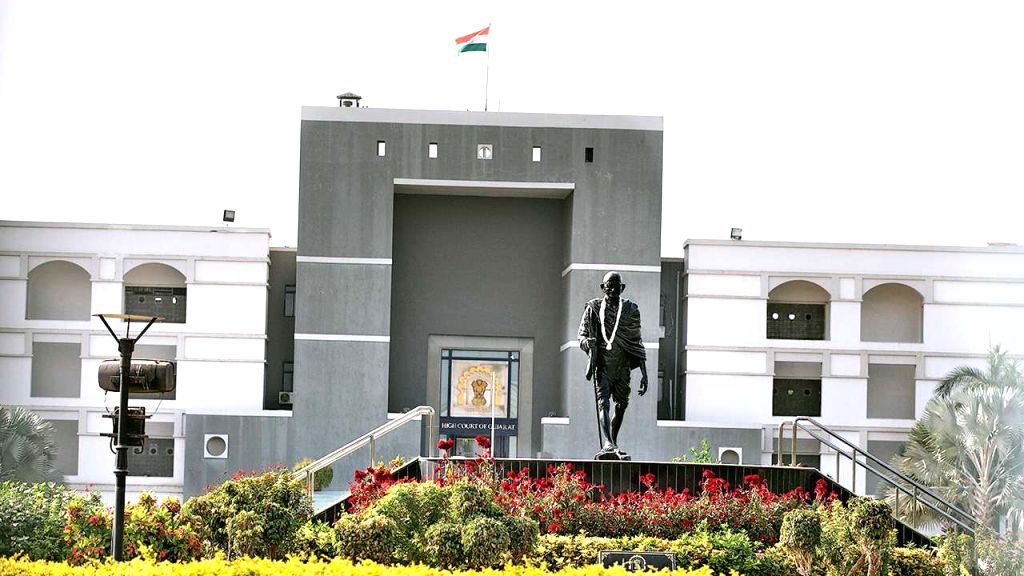
Imagine this scenario: your client has a legitimate GST refund claim for a specific period. You meticulously prepare and file it, well within the two-year statutory time limit. However, the department rejects it, not because the claim is invalid for the period in question, but because you filed the application after a new rule prospectively restricting such refunds came into effect. This frustrating conflict between a vested right and a procedural interpretation was the central theme in a recent landmark ruling by the Gujarat High Court.
Quick Case Details
- Case Name: M/S. Kush Proteins Pvt. Ltd. vs Union Of India
- Citation: C/SCA/5747/2025
- Court: Gujarat High Court
- Date of Order: 18/07/2025
The Background of the Dispute
M/s. Kush Proteins Pvt. Ltd., a manufacturer of edible oils, was facing an inverted duty structure—the GST rate on its inputs was higher than on its finished goods. This led to a consistent accumulation of Input Tax Credit (ITC). Under Section 54(3) of the CGST Act, the company was rightfully entitled to claim a refund of this accumulated ITC.
The situation changed when the government issued Notification No. 9/2022 dated 13.07.2022. This notification specified that edible oils, among other goods, would no longer be eligible for refunds arising from an inverted duty structure. Crucially, the notification was made effective prospectively from 18.07.2022.
Acting within its rights, Kush Proteins filed refund applications on 23.01.2023 for the period prior to 18.07.2022, a time when such refunds were fully permissible. The applications were filed well within the two-year time limit prescribed by law.
However, the department rejected the claim. Their entire argument was based on Circular No. 181/13/2022, which clarified that the restriction would apply to all refund applications filed on or after 18.07.2022, irrespective of the tax period to which the claim pertained. The initial rejection was upheld by the appellate authority, forcing the taxpayer to approach the High Court.
The Central Question Before the Court
The core legal issue was distilled into a single, critical question:
Can a GST refund claim, which pertains to a period when it was legally permissible, be denied solely because the application was filed after a new notification prospectively barred such refunds, even though the application itself was filed within the statutory time limit under Section 54?
What the High Court Held
The Gujarat High Court, siding firmly with the taxpayer, delivered a clear and decisive verdict. Relying on its own precedent in the Patanjali Foods Ltd. case, the Court dismantled the department’s argument piece by piece.
- ✅ Notifications are Prospective: The Court reiterated that Notification No. 9/2022 was explicitly made effective from 18.07.2022. A prospective law cannot be used to extinguish rights that had already accrued in a prior period.
- ❌ A Circular Cannot Override the Act: The Court held that a circular’s purpose is to clarify, not to impose new, restrictive conditions that contradict the parent Act. Section 54(1) provides a clear two-year window for filing a refund claim. The circular’s interpretation, which links the claim’s validity to the date of filing rather than the claim period, was deemed arbitrary and ultra vires the Act.
- ✅ The Principle of Vested Rights: The right to claim a refund for the period before 18.07.2022 was a right that had already accrued and become vested with the taxpayer. This vested right cannot be taken away by a subsequent procedural interpretation or administrative circular.
- ❌ Arbitrary and Discriminatory Classification: The Court found the circular’s logic to be discriminatory. It created an artificial class of assessees. Two taxpayers with identical claims for the same pre-18.07.2022 period would be treated differently: one who filed before the cut-off date would get the refund, while one who filed after (but still within the legal time limit) would not. This violates Article 14 of the Constitution.
The Court struck down the relevant part of the circular and quashed the rejection orders, making the rule absolute in favor of the taxpayer.
Key Learnings & Actionable Insights for Professionals
This judgment provides powerful ammunition for tax professionals. Here are the key takeaways:
- Argue the Sanctity of the Claim Period: In any SCN reply or appeal, your primary argument must be that the eligibility of a refund is determined by the law in force during the tax period of the claim, not the date of filing the application. This judgment provides direct authority for this principle.
- Challenge Overreaching Circulars: This case is a clear precedent to challenge departmental actions that are based on circulars that go beyond the scope of the Act or its Rules. If a circular introduces a condition not present in the statute, it is liable to be struck down.
- Distinguish Between Substantive Rights and Procedure: Frame your arguments by clearly separating the substantive right (the right to the refund itself) from procedural timelines. A procedure (like filing an application) is a mechanism to claim a right; it cannot be used to extinguish the right itself, especially when followed within the legally prescribed time.
- Leverage Favorable Precedents Aggressively: The Court’s reliance on the Patanjali Foods Ltd. case highlights the importance of citing relevant and binding precedents. When faced with a similar issue, citing this judgment from the Gujarat High Court will lend immense weight to your submissions.
Conclusion
The Kush Proteins ruling is a significant victory for taxpayers, reinforcing the fundamental legal principle that prospective laws cannot have retrospective consequences. It serves as a crucial check on administrative overreach and clarifies that a taxpayer’s vested right, pursued within the statutory framework, cannot be defeated by a flawed interpretation in a departmental circular.